

How Much Protein Do You Need to Build Muscle?
A clear, practical explanation of protein targets for active people, including how to use a range without turning every meal into a calculation.
By Reset90 AI
Protein matters for building and maintaining muscle, but the internet has turned a useful question into a daily argument about decimals.
You do not need to find one magical number. You need a reasonable range, a training plan you can repeat, and meals that make the range achievable without taking over your life.
A practical starting range
The International Society of Sports Nutrition position stand reports that a daily intake of roughly 1.4–2.0 grams of protein per kilogram of body weight is sufficient for most exercising individuals aiming to build or maintain muscle. You can read the full position stand here.
That is a range, not a command. Your needs depend on your training, total food intake, goals, age, preferences, and health. Someone who is new to strength training does not need to obsess over reaching the top of the range on day one.
If you have kidney disease, are pregnant, have a history of an eating disorder, or have another condition that affects nutrition, ask a qualified clinician or dietitian for individualized guidance.
Use the range as a target, not a test
Pick a target that feels realistic. If you currently eat very little protein, moving toward a consistent moderate amount is already a useful change. You can adjust later based on your training and results.
For a person who weighs 70 kilograms, the range would be approximately 98–140 grams per day. That example is only a way to understand the math. It is not a prescription for every 70-kilogram person.
Spread protein across the day
Instead of trying to eat most of your protein at dinner, include a source at several meals. A simple pattern might be breakfast, lunch, dinner, and one snack.
Useful options include eggs, Greek yogurt, milk, fish, chicken, tofu, tempeh, beans, lentils, cottage cheese, and other foods that fit your culture and preferences.
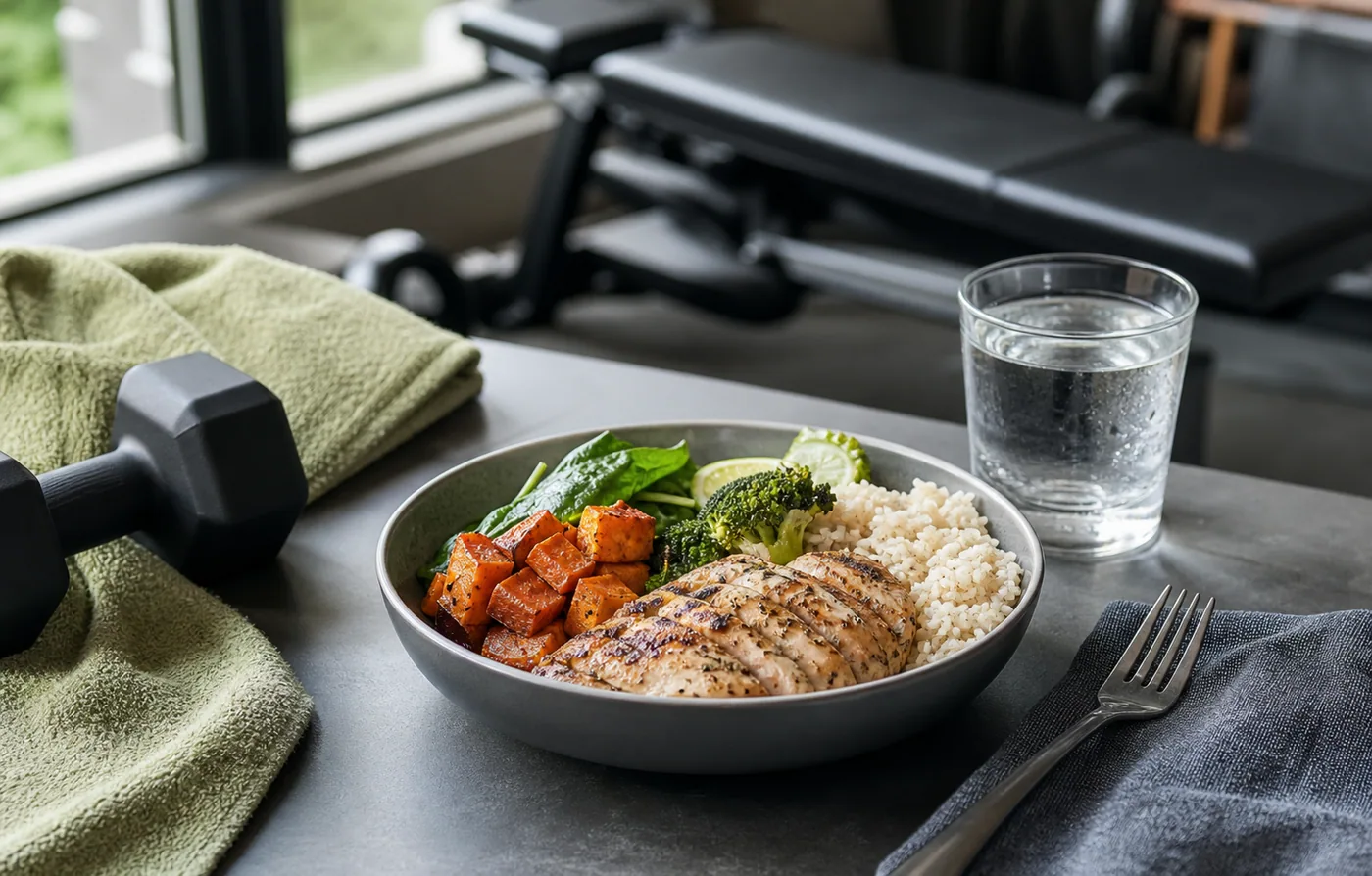
Whole foods can do the job
Protein powder can be convenient, especially when you are traveling or short on time. It is not automatically better than food. A varied diet can provide the protein you need along with other nutrients and a more satisfying meal.
Choose the option you can use consistently. Convenience is valuable, but expensive products and aggressive supplement marketing are not requirements for progress.
Protein cannot replace training
Eating more protein does not create a muscle-building signal by itself. Resistance training provides the stimulus. Food, sleep, and recovery help you respond to it.
That is why an extremely high protein target will not fix a plan with no progressive training, no recovery, or a calorie intake that does not match your goal.

Make protein easier with defaults
Use a few default meals:
- Breakfast: eggs or yogurt with fruit and oats.
- Lunch: a grain bowl with chicken, tofu, fish, beans, or lentils.
- Dinner: a protein source with vegetables and a carbohydrate you enjoy.
- Snack: milk, yogurt, cottage cheese, a sandwich, or a simple shake.
Defaults reduce the number of decisions you need to make on a busy day. They also make tracking easier because you already know what the meal looks like.
Pay attention to the bigger picture
Protein is one useful metric, not the entire definition of a healthy diet. Total calories, carbohydrates, fats, fiber, hydration, sleep, and enjoyment all affect whether your plan is sustainable.
If you are not sure where to start, read the simple nutrition tracking guide before adding more rules.
Make the target boring
The best protein target is one you can hit on ordinary days without needing a dramatic meal plan. Start with a reasonable range, use familiar foods, and let your training and weekly review guide the next adjustment.
Reset90 AI helps connect training, nutrition priorities, and check-ins inside one 90-day system. Try the App Store version.
Note: This article is general educational information and not individualized medical or nutrition advice. Consult a qualified professional for personal recommendations.
The Reset90 system
Useful ideas for building a body you can keep.
Training notes, product updates, and practical ways to make your next 90 days count.
Start your next 90 days
Get your daily training, nutrition, and check-in priorities in one adaptive system.
 Download on theApp Store
 Coming soon on theGoogle Play
Keep reading
Related articles

How Sleep Affects Your Training Progress
Sleep is not a bonus feature for serious athletes. It is part of the recovery system that makes your training easier to repeat.
Read article
How to Create a Workout Plan That Adapts to Your Schedule
A practical way to build a workout plan around your real week, including what to do when work, travel, or low energy changes the plan.
Read article
What to Do When You Miss a Workout
Missing one workout does not require a new identity, a punishment session, or a complete restart. Here is a calmer way to get back on track.
Read article