

How to Create a Workout Plan That Adapts to Your Schedule
A practical way to build a workout plan around your real week, including what to do when work, travel, or low energy changes the plan.
By Reset90 AI
A workout plan that only works during your perfect week is not really a plan. It is a wish with a nice font.
Real weeks have late meetings, long commutes, travel, family plans, bad sleep, and days when your brain is simply done. The goal is not to predict every interruption. The goal is to build a plan that can bend without breaking.
This guide shows you how to create an adaptive workout plan: one with a clear direction, flexible options, and a simple way to decide what to do when the original schedule stops making sense.
Start with a target, not a calendar
Before choosing Monday, Wednesday, and Friday, decide what you are trying to improve. Your target might be building strength, improving general fitness, getting ready for an event, or simply becoming the kind of person who trains consistently.
The target matters because it gives you a filter. If you miss a session, you can ask, “What is the next best action for my target?” instead of throwing away the whole week.
Keep the target specific enough to guide you, but not so rigid that one missed workout feels like failure. “Train three times per week and improve my main lifts over the next 90 days” is more useful than “get in shape.”
Build three versions of the week
An adaptive plan works better when you decide the fallback options before you need them. Create three versions of a training week:
- Full week: your normal sessions with enough time for a proper warm-up and complete workout.
- Short week: shorter sessions that keep the main movement patterns or priorities alive.
- Minimum week: the smallest version that still counts as showing up.
For example, a full lower-body session might become a 30-minute version with fewer accessories. On a minimum week, it might become a brisk walk plus two simple strength movements. The point is not that every version creates the same stimulus. The point is that the habit stays connected to your life.
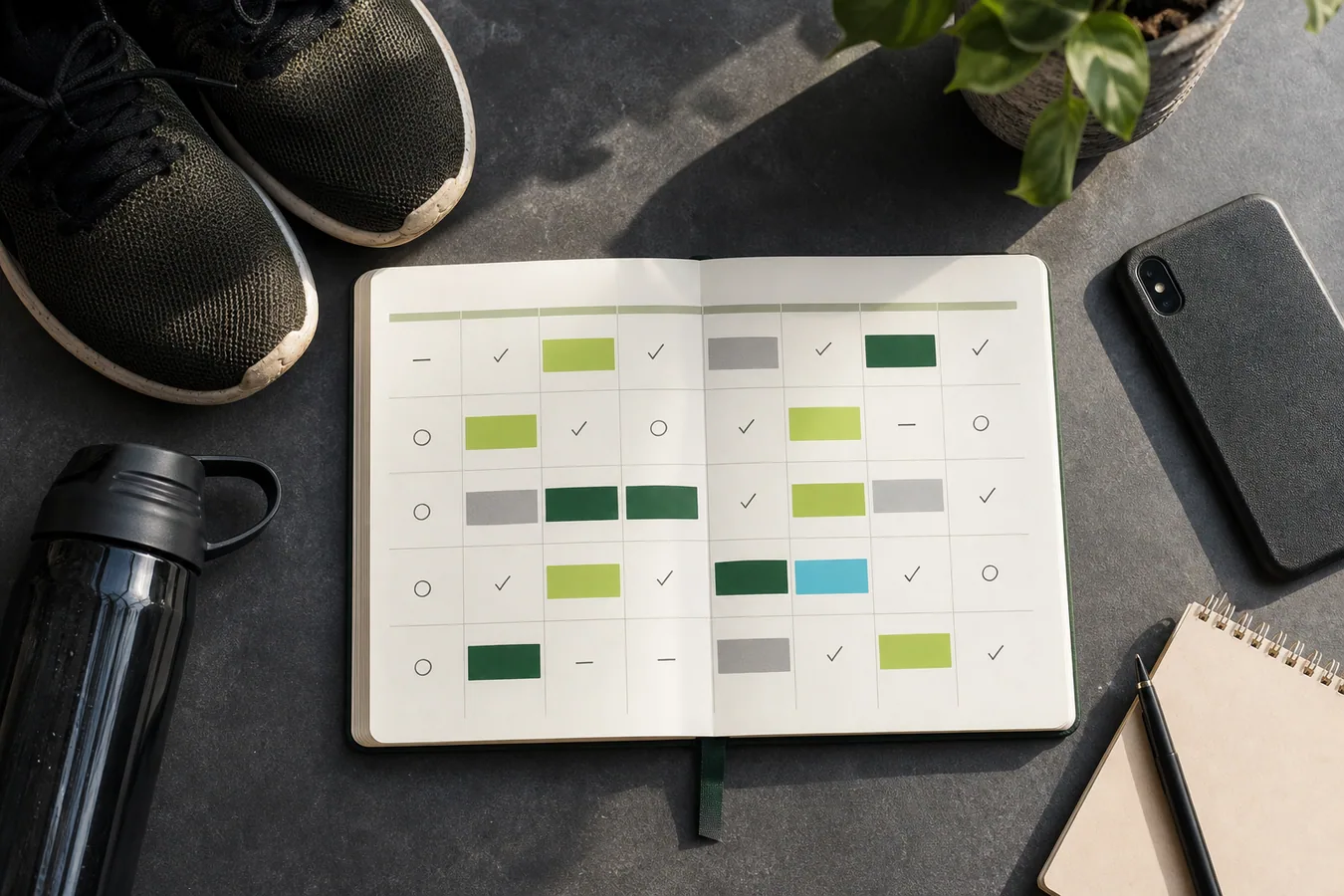
Keep the important parts stable
Flexibility does not mean changing everything every day. Keep a few anchors stable:
- The movement patterns you want to practice.
- The number of sessions you can realistically recover from.
- The order of your main priorities.
- A simple way to record what you did.
Everything else can move. The exact day, exercise variation, session length, and training location can change without making the plan meaningless.
Use a decision rule when your schedule changes
When the day goes sideways, do not renegotiate the entire plan. Use a short decision rule:
- How much time do I have today?
- How recovered do I feel?
- What is the most important session or movement I have not done recently?
- What is the smallest useful version I can complete?
This turns a vague decision into a practical one. You might choose a full session, a shortened session, or a recovery day. All three can be correct depending on the day.
Do not “make up” every missed session
A common mistake is trying to squeeze four missed workouts into the next two days. That usually creates soreness, stress, and another missed week.
When you miss a workout, continue with the next useful session. If the missed session was important, move it once. If moving it creates a crowded week, use the short version and return to the normal rhythm. You can also read what to do when you miss a workout for a more detailed reset.
Track decisions, not just workouts
Most people only record whether they completed a workout. An adaptive plan benefits from one extra note: why the session changed.
Write down “short on time,” “low energy,” “travel,” or “changed exercise.” After a few weeks, your notes reveal the real problem. Maybe your plan is scheduled too late. Maybe your travel weeks need a different template. Maybe your “normal” week is not normal at all.
That feedback is what makes the plan more intelligent over time. It is also the idea behind Reset90 AI: start with a clear 90-day direction, then make the next action fit the reality in front of you.
A plan should help you continue
The best workout plan is not the one that looks most impressive on paper. It is the one that gives you a useful next step on an ordinary Tuesday.
If you want a plan that combines training, nutrition, and daily check-ins, you can try Reset90 AI on the App Store. And if your biggest problem is consistency, start with the practical guide to staying consistent when motivation drops.

Note: This article is general educational information, not medical advice. If exercise causes sharp pain or you have a health condition, speak with a qualified professional.
The Reset90 system
Useful ideas for building a body you can keep.
Training notes, product updates, and practical ways to make your next 90 days count.
Start your next 90 days
Get your daily training, nutrition, and check-in priorities in one adaptive system.
 Download on theApp Store
 Coming soon on theGoogle Play
Keep reading
Related articles

How Sleep Affects Your Training Progress
Sleep is not a bonus feature for serious athletes. It is part of the recovery system that makes your training easier to repeat.
Read article
How Much Protein Do You Need to Build Muscle?
A clear, practical explanation of protein targets for active people, including how to use a range without turning every meal into a calculation.
Read article
What to Do When You Miss a Workout
Missing one workout does not require a new identity, a punishment session, or a complete restart. Here is a calmer way to get back on track.
Read article